Ask people to describe the best moments of their lives and they rarely mention lying on a sofa. They mention being lost in something: playing music, deep in a sport, absorbed in making or solving, so engaged they forgot to check the time. That state has a name, and understanding it changes what you should do with every reclaimed hour.
What is flow?
Flow is the psychologist Mihaly Csikszentmihalyi’s term for complete absorption in an activity that stretches your skills, the state in which self-consciousness falls away, action and awareness merge, and time seems to distort.1 He spent decades studying it across artists, athletes, surgeons, and ordinary people, and found it to be one of the most satisfying states a human being can occupy. Crucially, flow does not come from ease. It comes from challenge met by skill, from an activity demanding enough to absorb you fully without overwhelming you.
Why does this overturn how we think about rest?
Because it means the deepest satisfaction comes from active engagement, not passive relaxation.2 We treat rest as the absence of effort, the sofa, the screen, the doing-of-nothing, and then wonder why it leaves us flat. The research says the activities that restore us most are the ones that ask something of us. Active leisure is positively associated with wellbeing; passive leisure is neutral at best.3 The rest that works is not the rest that demands the least.
This is the same engine that makes work satisfying when it is challenging, pointed at the parts of life that are actually yours. The absorption you sometimes feel in a hard, meaningful work task is available off the clock too, in a craft, a sport, an instrument, a garden, a problem you chose because it interests you rather than because someone paid you to.
Why does passive consumption disappoint?
Because it provides none of the conditions flow requires. There is no challenge, no skill being stretched, no clear goal, nothing for attention to lock onto. So the mind drifts, half-engaged, and the hours pass without leaving a mark. This is the leisure paradox: we spend our most precious free time on the activities we rate least rewarding, precisely because they ask nothing of us, and they give back in proportion.3 Passive rest has its place in genuine exhaustion, but as a default for every free hour it quietly wastes the time you worked to reclaim.
How do you build leisure around flow?
Three conditions make flow more likely, and you can engineer all three. First, a clear goal, an activity with a point you are working toward, however small. Second, a match between challenge and skill, hard enough to absorb you, not so hard it frustrates, which is why flow activities tend to get more rewarding as you improve at them. Third, uninterrupted time, because absorption cannot develop in five-minute fragments any more than deep work can. The same protected blocks that enable focused work enable flow in leisure.
So when you reclaim an afternoon, do not default to the screen. Point the time at something that can absorb you and that you can get better at over years. That is the difference between time off that refreshes and time off that evaporates. Flow is the strongest argument against the idea that working less means doing less. You are not trading effort for idleness. You are trading shallow, externally-imposed effort for deep, self-chosen engagement, which is, on the evidence, where a great deal of human happiness actually lives.
Frequently asked questions
What is a flow state?
Flow, a concept from psychologist Mihaly Csikszentmihalyi, is the state of complete absorption in an activity that stretches your skills, where you lose track of time and self-consciousness. It is one of the most satisfying states a person can experience.
Why is active leisure better rest than relaxing?
Because the deepest satisfaction comes from engagement that challenges you, not from passive ease. Flow-producing activities leave you energised and fulfilled, while passive consumption tends to leave you flat despite feeling effortless.
How do you build leisure around flow?
Choose free-time activities with a clear goal and a level of challenge that matches your skill, learning, making, playing, moving, and protect uninterrupted time for them so absorption can develop.
About the author
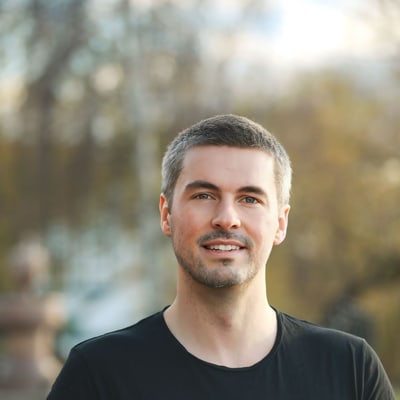
Tom Goodwin is the author of Don’t Work Harder, a book about taking the time AI gives back as time rather than more work. He is a co-founder of GAMEPLAN and writes on productivity, technology, and the economics of the working week.
Footnotes
Footnotes
-
Mihaly Csikszentmihalyi, Flow: The Psychology of Optimal Experience (1990). ↩
-
Csikszentmihalyi (1990): the deepest satisfaction arises from active engagement that stretches one’s skills, not from passive relaxation. ↩
-
Research on active versus passive leisure (e.g. Holder et al., 2009) finds active leisure positively associated with wellbeing and passive leisure neutrally or negatively associated; compare the leisure-paradox findings of Kubey and Csikszentmihalyi (2002). ↩ ↩2